
Build King of Nature around a growth route you can protect: early Mycelium for accumulated spores, or Forest-supported Boars paired with an attacker that benefits from their health. Keep enough immediate combat power to survive while that growth develops. Use Elf, poison, or an available off-faction attacker to fill the damage role your opening lacks.
This guide follows version 0.9.8. Patch #31 slightly buffed Elf and Mycelium, but it does not make every Nature opening a guaranteed high difficulty win. The current plan depends on draws, support connections, and the enemies you face. Start a new run after patching before evaluating its performance.
Pick one growth route first
Nature offers several attractive pieces, but putting all of them on the board does not automatically create synergy. Mycelium wants time to accumulate spores. Forest grows neighboring troop health. Boar converts its health into value for riders. Elf supplies a particular ranged attack pattern.
| Route | Core pieces | What must happen first | Main weakness to watch |
|---|---|---|---|
| Spore investment | Mycelium plus a working screen | Place Mycelium while the run still has time to grow | A late placement cannot replace immediate damage |
| Boar and rider | Boar, Forest, a suitable neighboring troop | Develop Boar health and preserve the combined army | A fragile pairing dies before its offensive contribution |
| Supported Elf | Elf and relevant troop support | Protect a ranged recipient and improve useful attacks | The frontline collapses or enemy pressure reaches the backline |
| Poison support | A valid poison recipient and a surviving army | Apply the effect through a working combat source | Poison does not arrive fast enough to repair the opening |
Choose the route that your present cards can support. A hand with Mycelium but no Boar does not need to become a rider build immediately. A well-supported Boar does not need to share resources with a second distant system just because another Nature card appears.
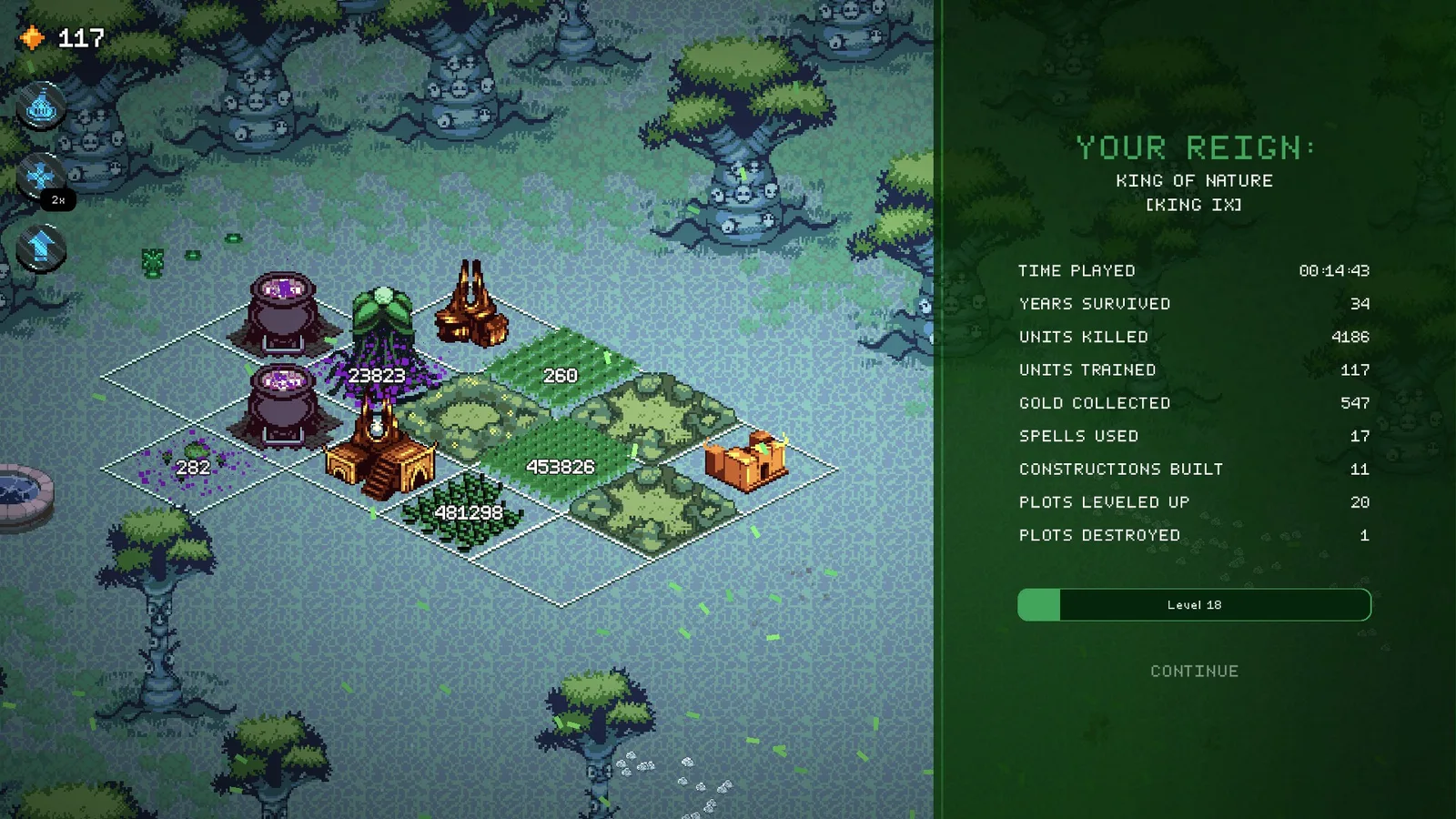
Layout reference only; use current card previews for stats and effects.
Give the early army enough direct power
The main danger is investing in growth before the army can survive. A Forest needs useful neighbors and time. Mycelium needs battles in which its contribution can accumulate. Neither should be treated as a substitute for the troop or damage you presently lack.
Use the available frontline and attacker to establish a viable opening. If Boar appears early, improve its survivability and evaluate what adjacent rider would do. If Elf is the main damage source, make sure it is not immediately exposed when the battle begins.
Treant contributes both damage and healing, but the full build should not rely on the base repairing every weakness. A troop that dies immediately may need a different screen or better durability. An army that survives but cannot finish enemies needs more useful damage.
Read the first decisive failure in battle. If the enemy reaches the backline while your frontline disappears, buy time. If the screen holds but enemies remain alive, improve damage. This decision is more useful than adding another support card solely because it belongs to Nature.
Place Mycelium while its time advantage matters
Mycelium accumulates spores over its lifetime. Earlier placement gives it more opportunity to develop, which is why it is attractive as a long term investment. It is not an instant catch-up mechanism when drawn after your army has already become unsafe.
Protect that investment with an army that can get through the next fights. The build can use a temporary damage source or frontline while the spores become more numerous. Spending every reward on Mycelium while the enemy destroys your screen may end the run before the investment pays off.
When considering another Mycelium versus an upgrade, compare the current board rather than copying a fixed rule. A new plot starts another growth source but consumes space. An upgrade can improve an existing plot without taking the tile you need for protection or support.
Do not infer a guaranteed year threshold from an old endless screenshot. Spore quantity and contribution depend on timing, the rest of the build, and the current rules. Look at how much the present Mycelium contributes during battle, then decide whether more investment helps the actual next encounter.
Grow Boar health before judging the rider combination
Boar's health affects the value of the rider it supports. A pairing with an undeveloped Boar therefore differs from the same rider attached to a Boar that has received meaningful health growth. The rider's name alone does not determine the result.
Forest is a natural support for that health plan. Connect it to the Boar with cardinal adjacency and allow the support time to work. Before occupying another neighboring plot, inspect whether you will still have a place for the intended rider.
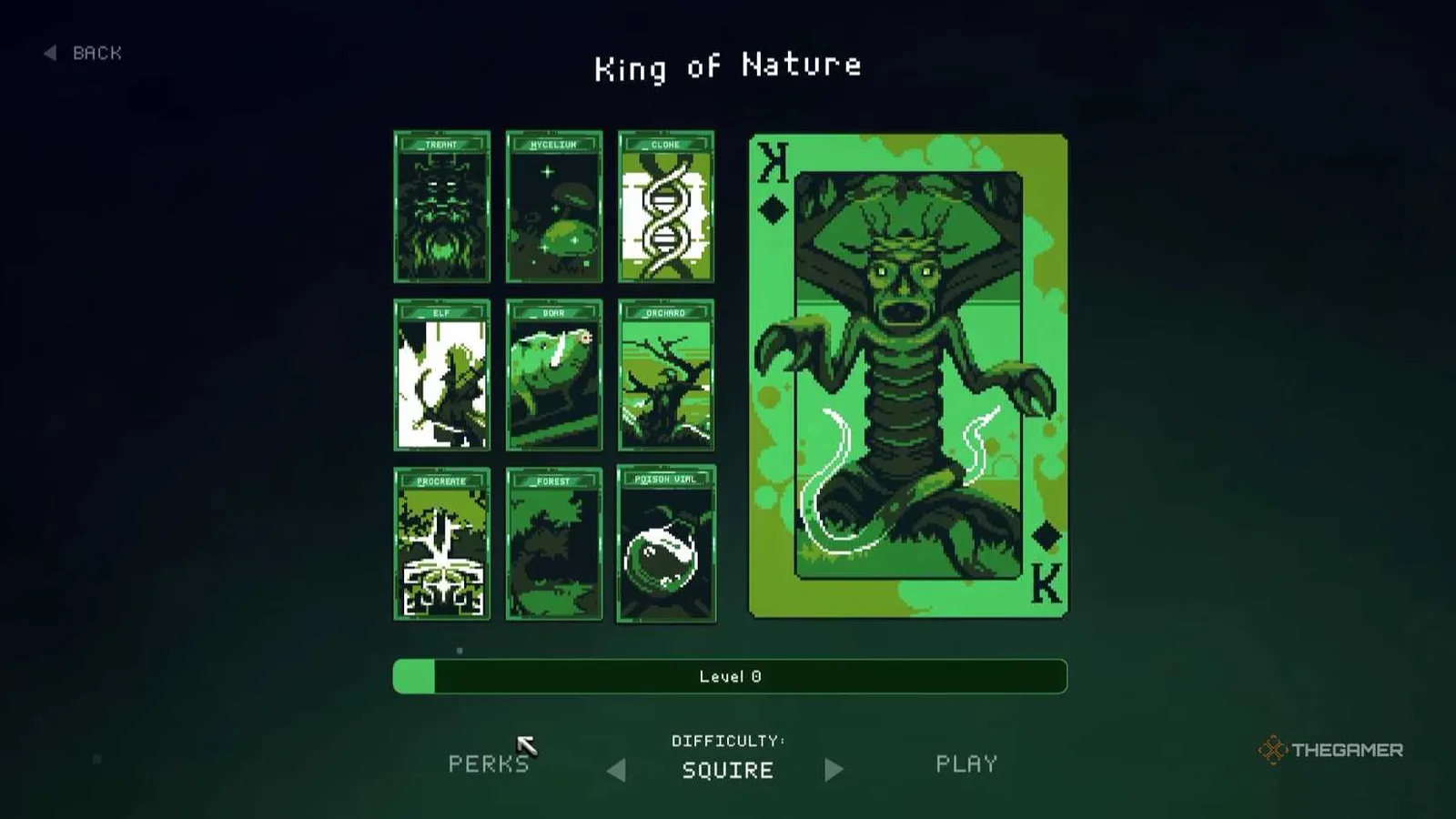
Identify the card names and artwork here; use their current previews for effects.
Avoid an exact universal health target. Older community advice gives thresholds from particular runs, but those numbers do not establish when every current difficulty becomes safe. Check the combined army's health, damage pattern, and survival in the actual battle.
There is a timing choice as well. Adding a rider can improve offense, while continued health development can strengthen the eventual pairing. If the present army lacks damage, waiting indefinitely is dangerous. If the pairing already survives, further health support may be a sensible long term investment.
Choose the rider by the problem it solves
A rider should supply the job missing from your army. An area attacker can help against grouped enemies. A ranged attacker provides a different attack opportunity. A defensive troop can preserve contact time. These roles are distinct even when all the recipients can benefit from Boar support.
Warlock is a relevant off-faction candidate for area damage. Soldier or Paladin offers a different frontline emphasis. Elf gives a ranged option already in the Nature deck. Choose according to availability and whether the resulting troop remains alive long enough to contribute.
Do not call one pairing universally strongest. Community reports disagree about late difficulty Nature builds, and the current patch changes the comparison. The useful approach is to explain what the pairing does and what can interrupt it.
Watch both halves. If the rider's offense is good but the pairing dies early, improve durability or protection. If it survives but does too little damage, use relevant offensive support or change the rider. Adding another Boar does not necessarily fix low damage from an unsuitable attacker.
Use Elf as a deliberate ranged tool
Elf targets distant enemies. That gives it a specific purpose rather than making it interchangeable with any ranged troop. Against an enemy whose valuable unit sits behind a frontline, that targeting can be useful. It also means your own frontline and other attackers may be fighting different targets.
Patch #31 slightly improved Elf stats, and the Elven perk received a damage increase in Patch #30. Use current card and perk previews when assessing the plot. An old damage value copied from a launch guide is not a reliable description of your current Elf.
Support the plot according to its role. Health can help it survive pressure, population can increase its presence, and damage support can improve the targets it actually attacks. Do not spread the same limited resources among several Elf plots before one protected attacker becomes effective.
If an opposing backline reaches or targets your Elf, evaluate the protection directly. A ranged attack pattern does not guarantee safety. A working screen and appropriate defensive effects remain necessary when the enemy bypasses the ordinary frontline.
Add poison to an attacker that applies it
Poison Vial now grants three poison stacks to troops instead of the old single stack. Cauldron also provides three stacks per level under the deck rework. These current effects make old exact stacking instructions obsolete.
The recipient matters. A troop or tower must apply poison through supported attacks for the effect to influence enemies. More poison support is not useful if the chosen recipient dies before attacking or targets an irrelevant enemy while the rest of the army loses.
Toxic makes poison ticks faster in the current perk rework. That can support an existing poison plan, but it does not create a complete frontline or a damage source by itself. Keep the present army's survival and attack opportunities in the decision.
Avoid assuming every Nature effect spreads poison. Orchard roots and base interactions have changed or generated conflicting old reports. Use a recipient whose current description and preview support the effect rather than extending poison mechanics to an unverified attack.
Treat Orchard as control with a defined purpose
Orchard traps and damages enemy units. Its value is tied to control and the targets affected, not merely to the fact that it belongs to the same faction as your main carry. The Gardener perk now increases Orchard quantity per plot level, which changes how a supported Orchard investment can develop.
Add it when your current army needs more time against approaching enemies. If your problem is an exposed ranged carry dying immediately, Orchard may not reach or delay the responsible attacker. If your army already survives comfortably, another damage or health improvement could be more relevant.
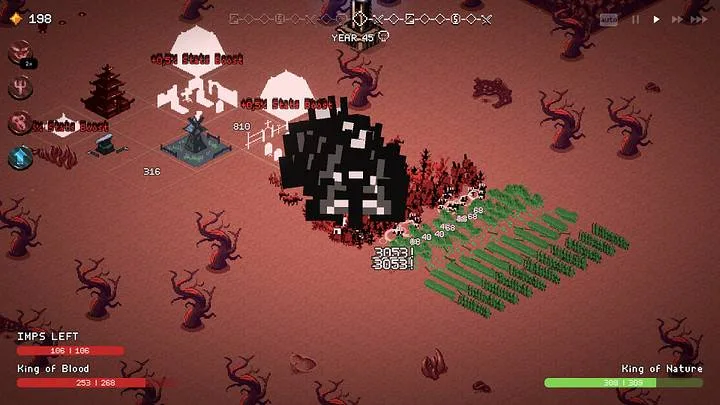
Read the enemy screen and ranged presence separately from the large summons.
Do not assume an attack-speed buff improves every part of a control effect in the same way. Inspect the current tooltip and observe its contribution. The right support is the one that improves useful behavior, rather than a multiplier chosen because it works well on another tower.
Use Clone and Procreate where the value concentrates
Clone offers flexibility because it becomes the card you use it on. That can help reproduce a missing part of your engine or improve an existing useful plot. Choose a target after considering the available space and the next fight.
Procreate increases troop population. Use it on a recipient whose extra troops improve the army's working plan. A rider, a valuable frontline, or a developed ranged plot may provide that value. Adding population to an unsupported troop you intend to replace can waste an important opportunity.
Neither card requires you to split the build. A copied support building should have a useful connection, and a copied damage source should have protection. Concentrating population and support on a functioning core is easier to evaluate than creating several new incomplete combinations.
If an upgrade preview reveals that another level solves the present weakness, take that improvement seriously. A clever copy sequence that needs multiple future draws may be less useful than an immediate defensive or damage gain on your existing army.
Repair late fights before adding more growth
Late losses can expose a weakness hidden by earlier fights. Enemy durability may demand stronger damage; enemy ranged pressure may threaten a rider or Elf; a wide attack pattern may bypass the screen. Diagnose the first failure before changing the whole build.
Keep access to off-faction tools when they supply something Nature lacks in your run. Blacksmith can improve attack, Beacon can improve speed, and a suitable defensive effect can protect a valuable recipient. Each should connect to the existing engine instead of demanding an unrelated second army.
Nature's growth is useful when it reaches a functioning combat relationship. Preserve the spore investment or health-supported pairing that contributes, then repair the specific reason it stops contributing. A board full of Nature cards is less important than a board whose growth, protection, and damage reinforce each other.